With the new year now well in our rear-view mirror, I have indeed noticed that the days are getting longer again. At first it was just the evening where dusk was pushed out a tiny bit, but more recently, it has started to get brighter earlier in the morning as well.
Well, of course this reminded me of Norman Kean’s article on the Equation of time in the ICC News, where he explained this phenomenon quite elegantly. The big surprise came when I found this as far back as the 2022 spring issue!
Here is the article:
The Equation of Time Revisited
by Norman Kean
I have often wondered why we don’t change our clocks symmetrically on either side of the winter solstice. We put them back two months before it, but we don’t put them forward until three months after it. If we did it symmetrically, we’d be changing the clocks the last Saturday in February. But I had a thought. At the end of October, the sun is 16 minutes ahead of the clock, but at the end of February it’s 12 minutes behind. If we were to change the clocks the last weekend of February we’d be back to the miserable gloomy mornings of January 21 or so. Whereas in October, the mornings are almost half an hour brighter than they are now, thanks to the Equation, and get brighter again when the clocks go back. Somehow the loss of the evening light isn’t so painful then, and we’ve had an extra month of it anyway. In the spring, by waiting until March, when the sun has caught up by 7 minutes, but more importantly the day is a good bit longer anyway. Then the loss of the morning light isn’t felt so badly.
Equation of Time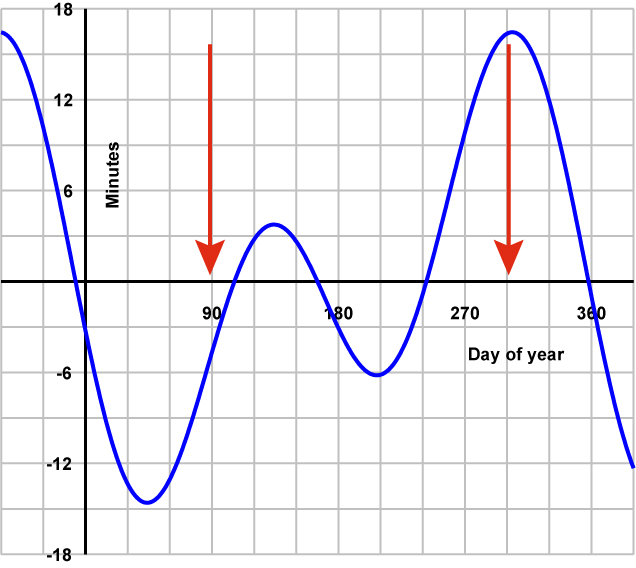
I know that not everywhere in the world changes the clocks at the same time. But I think the asymmetry is common to all. I may of course be talking rubbish. I have also to remind myself that the gloomy-morning problem affects us particularly at 9 degrees west, while the dates were decided in London, zero degrees, where the sun rises half an hour earlier at the moment. When the idea of sticking with summer-time for 12 months is discussed in the UK, the gloomy morning problem in Aberdeen is usually cast up. Whereas – given that Ireland would have little choice but to follow the UK’s lead (and hence Northern Ireland’s) – the gloomiest mornings would actually be in Skibbereen and Westport.
I did once write to the government about that, when the topic last came up, because I don’t think anyone in it had a clue. Anyway, they’re four degrees east of here. I didn’t refer to the Equation of Time because they definitely would not have understood that.
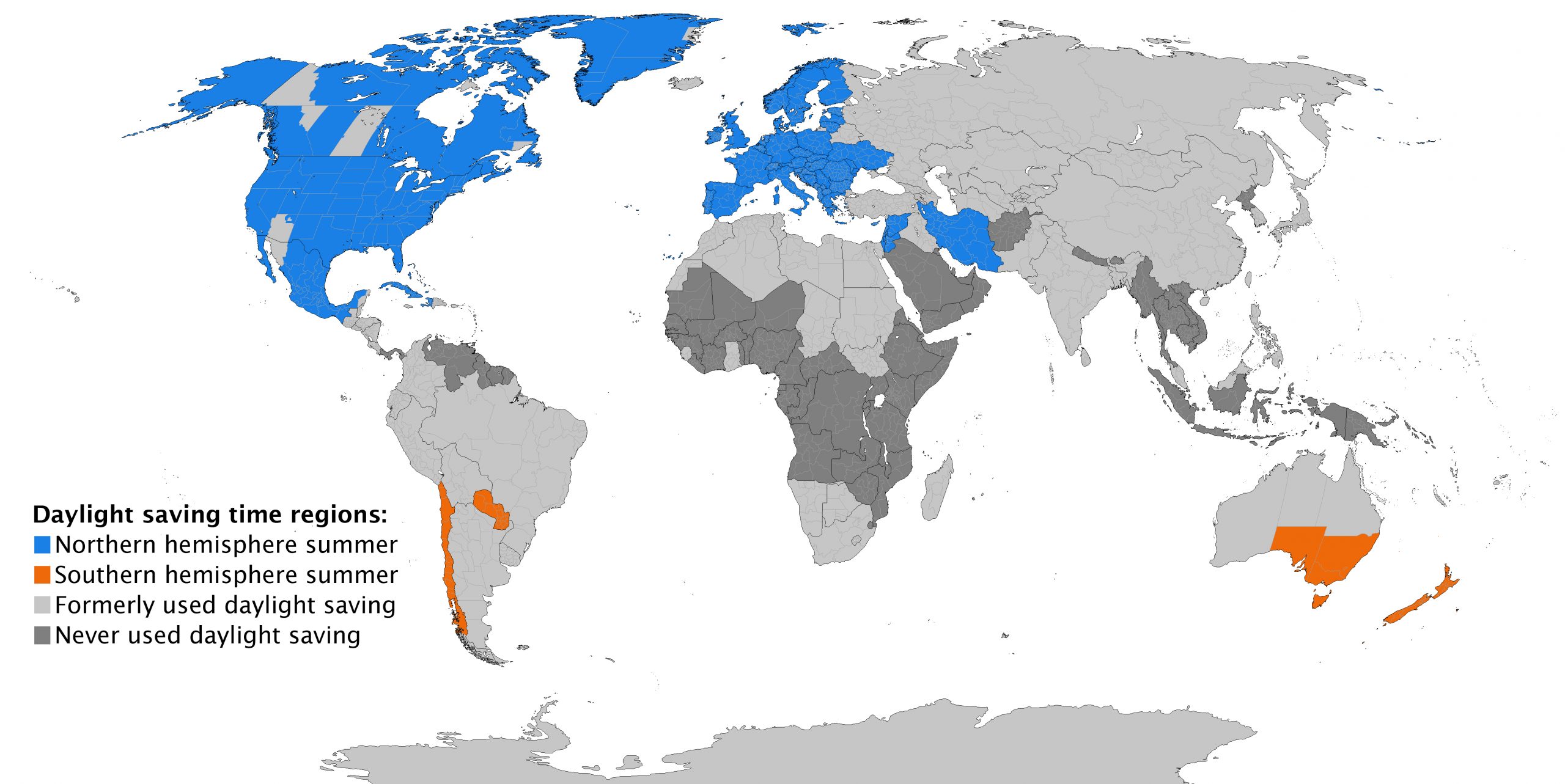
By TimeZonesBoy – Own work, CC BY-SA 3.0, https://commons.wikimedia.org/w/index.php?curid=17593495. Distinguished from summertime in the northern hemisphere and southern hemisphere.
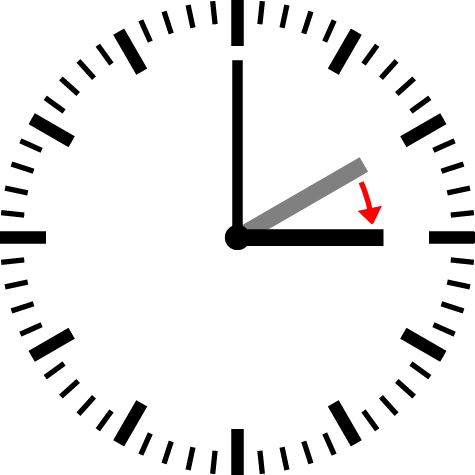
When DST observation begins, clocks are advanced by one hour (as if to skip one hour) during the very early morning.
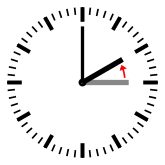
When DST observation ends and standard time observation resumes, clocks are turned back one hour (as if to repeat one hour) during the very early morning. Specific times of the clock change vary by jurisdiction.